
What Makes The Masters So Compelling Has Very Little to Do With Golf
The Masters: A Masterclass Branding
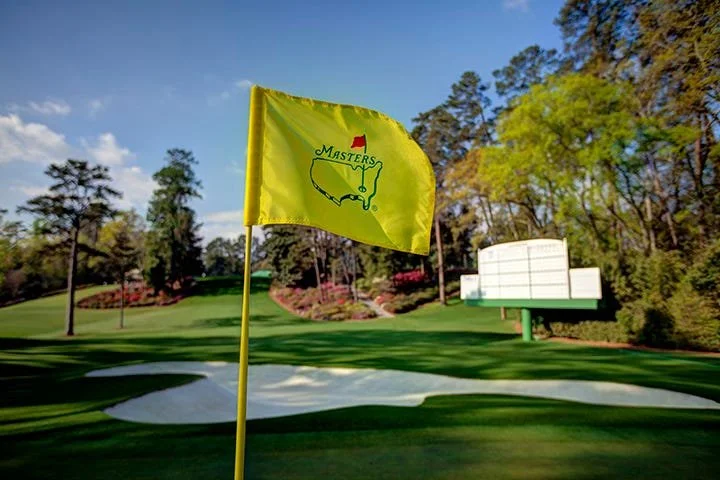
There are certain brands, institutions, and experiences that feel as though they have moved beyond promotion and into something rarer: cultural inevitability.They no longer need to asking for our attention, they have long since earned it. Their authority is not built through volume or constant reinvention, but through the slow accumulation of disciplined choices that, over time, become inseparable from the identity itself.
That is what fascinates me about The Masters.
Every year, people who do not regularly watch golf still find themselves drawn to it. While that reaction is often chalked up to prestige or tradition, I do not think those words go nearly far enough. Plenty of brands borrow the language of prestige and position themselves around ‘heritage,’ ‘exclusivity,’ or ‘excellence.’ Very few create an experience that feels this coherent.
The value of omission.
What The Masters understands especially well is that brand power is often shaped as much by omission as by expression.
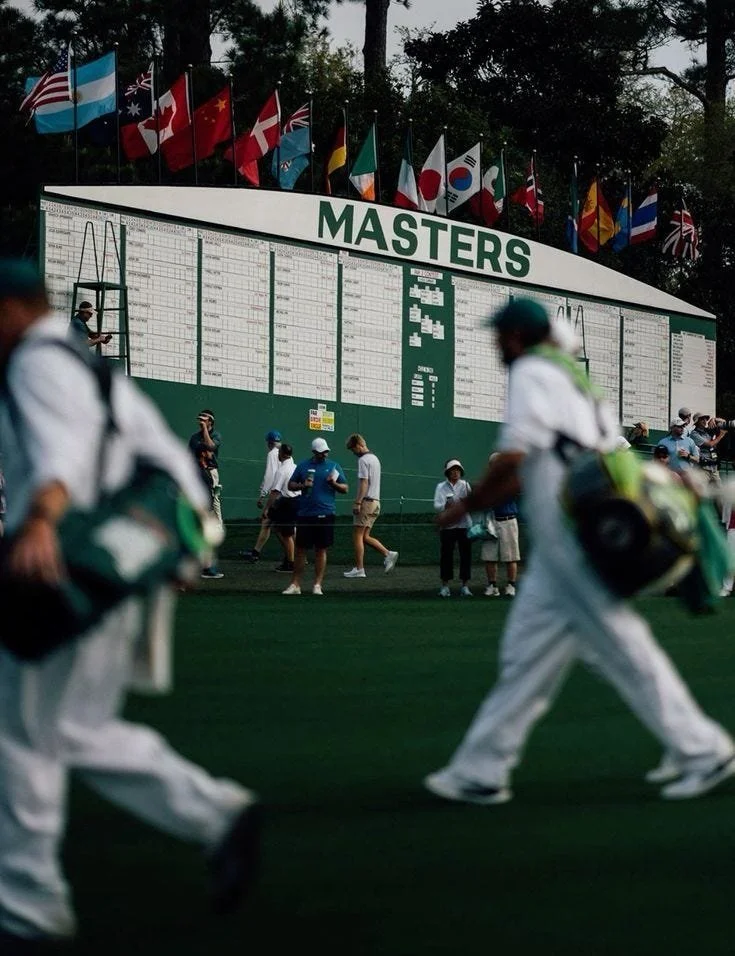
So much of contemporary marketing is built on accumulation. More graphics, more overlays, more sponsor visibility, more messages, more urgency, more proof that attention is being captured and monetized at every available moment. The Masters operates differently, keeping visual field unusually protected. There is an absence of clutter, an absence of competing identities, an absence of the kind of commercial overload that has become standard in most large-scale events.
That absence does important psychological work.
When an environment is not fragmented by competing visual demands, the audience can settle into it more fully. Their attention is not being redirected every few seconds. Their impression of the experience remains whole. In practical terms, that means The Masters is not allowing other brands to dilute the emotional and visual authority of the event itself. It understands that preserving atmosphere is, in its own way, a form of brand strategy.
This, to me, is one of the clearest markers of confidence. A weaker brand feels pressure to maximize every surface. A stronger brand recognizes that the integrity of the experience may be worth more than the short-term revenue that extra clutter might bring.
Scarcity that encourages hope.
Scarcity, in branding, is only effective when it creates desire without producing resentment (which is a difficult balance to strike.) Too much openness, and the brand loses distinction, but too much gatekeeping, and the brand begins to feel socially closed off in a way that hardens people against it. The Masters manages this tension beautifully through the structure of the lottery. Rather than making access feel like a privilege reserved for a visible inner circle, it frames scarcity through possibility. The chances aren’t likely of getting in, but you can still try. That subtle difference changes the entire emotional tone to allow The Masters to hold onto prestige while avoiding exclusivity to harden into alienation.
Presence as part of the experience.
In a culture where nearly every event is designed with documentation in mind, The Masters insists on being present. The use of cell phones is prohibited at Augusta. That choice is striking precisely because it runs so deeply against the grain of modern culture. Most brands claim to want attention, they want you to post the video to TikTok, they want the attention, but what they don;t realize, is they are instead creating environments that encourages constant self-interruption rather than undivided attention. The Masters removes one of the primary mechanisms of distraction and, in doing so, reinforces a different kind of relationship between the guest and the event.
What remains, then, is direct experience. From a psychological standpoint, that matters because attention shapes memory. The more fractured the attention, the thinner the memory often becomes. The Masters seems to understand that an immersive experience can carry more long-term cultural and emotional value than one optimized for endless shareability.
No soggy hot dogs here.
At an event with this level of demand and prestige, concession inflation would be entirely expected. I mean, in a world where sporting events charge an arm and a leg for a soggy hot dog, most of us are conditioned to anticipate it. Premium events routinely use food and beverage as a place to maximize extraction. But The Masters' famously modest concession pricing has become part of the brand’s mythology precisely because it violates that expectation.
The pricing strategy communicates to patrons that once they are inside the experience, they will not be exploited by it. This lowers defensiveness and reinforces the sense that the event is being stewarded, not squeezing you for every available dollar. In hospitality terms, the patrons feel looked after rather than taken advantage of. They feel that someone considered not only what would be profitable, but what would feel fair.
The art of conviction.
Brand equity is not built by how much you can add, but by how carefully you protect what matters. Some of the most iconic brands in the world are not the ones constantly reinventing themselves, but the ones that have learned how to protect what made them matter in the first place.
The Masters understands the power of preservation. Not preservation in a nostalgic sense, but in a highly strategic one. In a culture where most brands are trained to chase novelty, maximize every surface, and prove relevance through constant expansion, The Masters seems governed by an entirely different question: what must remain protected for this to keep feeling like itself?
That question is doing enormous work.
